


Babbitt alloy bearing bush, bearing sleeve, tin alloy
Contact Info
- Add:Li Zhai Xiao Zhuang Village, Zhangzhuang Township, Shangshui County, Zhoukou City, Henan Province, Zip: 466100
- Contact: 张粉
- Tel:15938614066
- Email:hnhcjsclmyyxgs@sohu.com
Other Products


Babbitt metal is primarily used for the bushings, bearings, liners, and sleeves of large machinery spindles. Examples include cement machinery, steel machinery, chemical machinery, papermaking machinery, petroleum machinery, ship machinery, compression machinery, coal mining machinery, mineral processing equipment, etc. It can also be used in large machine tools to replace brass, with excellent results.
In addition to manufacturing sliding bearings, due to its soft texture and low strength, Babbitt metal is often sprayed in wire or powder form onto substrates such as steel to create bushings. To prevent component segregation and refine the grain structure, a small amount of arsenic is often added.
According to national standards, Babbitt metal can be divided into two types: tin-based alloys and lead-based alloys. Lead-based alloys have lower strength and hardness compared to tin-based alloys and also exhibit poorer corrosion resistance. Therefore, when customers use Babbitt metal, they typically opt for tin-based alloys, with common grades including ZChSnSb11-6, ZChSnSb8-4, ZChSnSb8-8, etc. Although lead-based alloys do not perform as well as tin-based alloys, many customers still choose to use them because they are more economical.
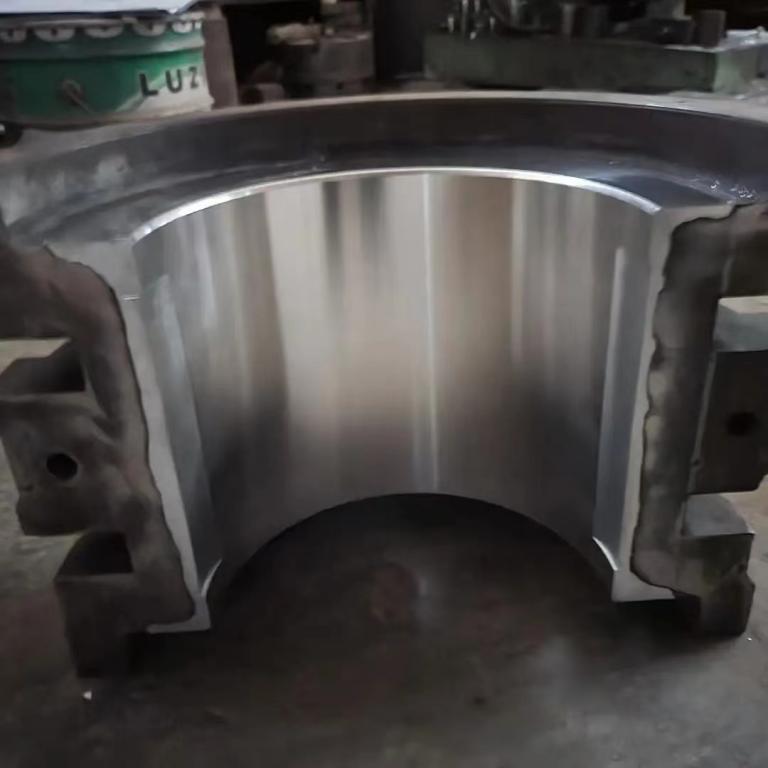
Babbitt alloy bushings in internal combustion engines are sliding components within the sliding bearings of internal combustion engines. They are shaped like half-cylindrical tiles and are called bushings. Due to the heavy weight of internal combustion engine shafts, rolling bearings cannot be used; only sliding bearings are suitable. Most bearing joints are horizontal, though some are inclined to meet the requirement that the load direction is nearly perpendicular to the joint surface. To facilitate the entry of lubricating oil between the friction surfaces, the bearing cap is equipped with an oil injection hole, and the bushing has axial oil grooves to distribute the lubricating oil. Bearing caps and seats are mostly made of cast iron, while those承受ing heavy loads are made of cast steel or welded steel plate structures.
Babbitt alloy and the lining are used directly in配合 with the journal, experiencing friction between them and also承受ing alternating and impact loads. Since the shaft is a critical component of the machine, with complex manufacturing processes, high costs, and difficulty in replacement, to ensure minimal wear on the shaft, the hardness of the bushing should be much lower than that of the journal. If necessary, the worn bushing can be replaced while the shaft continues to be used.
Babbitt alloy should have sufficient compressive strength and fatigue resistance; good anti-friction properties (low friction coefficient); excellent ability to retain lubricating oil; good磨合性; good thermal conductivity and corrosion resistance; and good processability to facilitate manufacturing and keep costs low. Since no single material can meet all these performance requirements simultaneously, Babbitt alloy can be cast onto 08 steel bushings using a casting method to create bimetallic bearings.
Babbitt alloy material is used to manufacture components such as bushings and sleeves, which are friction pairs directly配合 with the shaft or journal. Sliding bearing materials must possess good anti-friction properties, wear resistance, embeddability, compliance, corrosion resistance, and sufficient load-bearing capacity to reduce friction and wear,延长ing the bearing's service life. Bushings are made from sliding bearing materials with excellent anti-friction properties, including metallic materials (such as copper alloys, aluminum alloys, and Babbitt alloys) and non-metallic materials (such as plastics, graphite, rubber, and wood). Some metallic materials with good anti-friction properties have low strength (like Babbitt alloy), so they are only cast as a layer on the surface of higher-strength bushings, known as bearing liners. The part supporting the bearing liner is called the liner backing, often made of mild steel, cast iron, or bronze. To further improve the surface properties of the bearing liner, a thin layer of metal with better anti-friction properties (such as indium) can be plated onto its surface. Bushings made from multiple layers of different metallic materials are called multilayer metal bushings. Bushings whose inner hole shape is largely unaffected by the bearing housing孔 shape are called thick-walled bushings; those whose inner hole shape primarily depends on the bearing housing孔 shape are called thin-walled bushings. Thin-walled bushings are widely used in mass-produced machines such as internal combustion engines and air compressors.
Compressive strength and fatigue strength, wear resistance,磨合性, friction compatibility to prevent adhesion to the journal, compliance to compensate for initial poor fit of sliding surfaces, embeddability to allow hard particles to embed and reduce journal scratching, thermal conductivity, corrosion resistance, processability, price, etc. 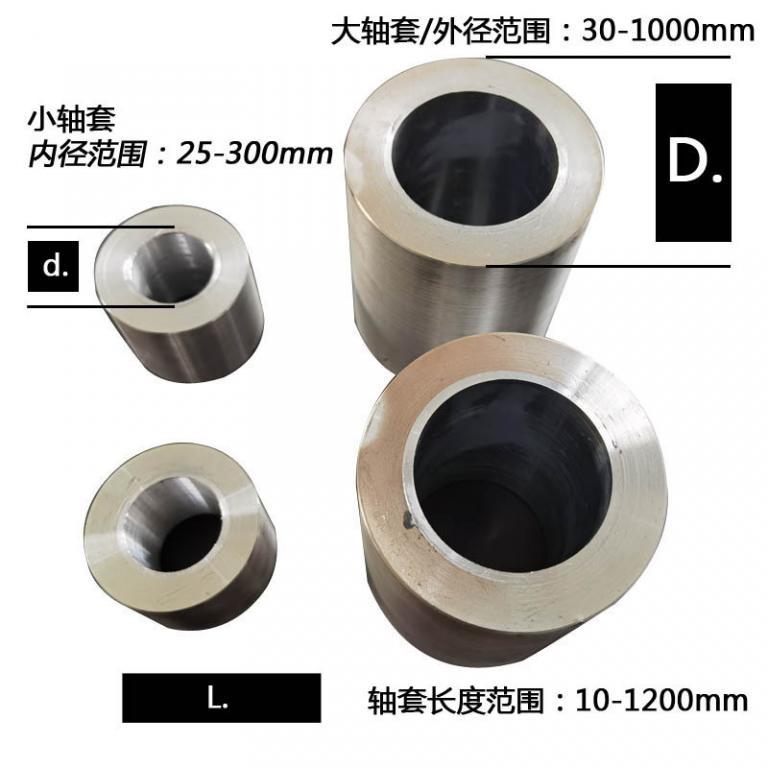
| Industry Category | Chemicals/Chemical Intermediates/Intermediate Compounds |
|---|---|
| Product Category | |
| Brand: | 桦创 |
| Spec: | 桦创 |
| Stock: | 60000 |
| Manufacturer: | 河南桦创金属材料贸易有限公司 |
| Origin: | 114116 |


